

Your garage door is one of the largest and heaviest moving parts of your home—and the springs are what make it all work. Garage door springs carry the immense weight of the door (often 150-250 pounds or more), allowing it to open and close smoothly thousands of times per year.
But like any mechanical component, garage door springs don’t last forever. The average torsion spring is rated for about 10,000 cycles—that’s roughly 7-10 years for most households. When these springs begin to fail, they don’t just cause inconvenience; they can create serious safety hazards and lead to expensive secondary damage to your garage door opener, cables, and door panels.
The good news? Failing springs usually give warning signs before they break completely. By learning to recognize these symptoms early, Central Minnesota homeowners can schedule a professional garage door spring replacement before getting stuck with a door that won’t open—or worse, one that comes crashing down.
In this comprehensive guide, we’ll cover the seven telltale signs that your garage door springs are on their way out, explain the critical safety reasons why this isn’t a DIY repair, and show you exactly what to do if you spot these warning signs.
7 Warning Signs Your Garage Door Springs Are Failing
1. Your Garage Door Feels Unusually Heavy
One of the earliest and most common indicators of worn garage door springs is when your door suddenly feels much heavier than usual. Your springs are designed to counterbalance the weight of the door, making it easy to lift manually or with minimal effort from your opener.
Try this simple test: Disconnect your garage door opener by pulling the manual release cord (the red handle hanging from the trolley). Then try lifting the door manually about halfway. A properly balanced door should stay in place when you let go. If the door feels like it weighs a ton, slams back down, or slowly drifts closed, your springs have lost their tension and need professional attention.
2. Visible Gaps in Your Torsion Spring
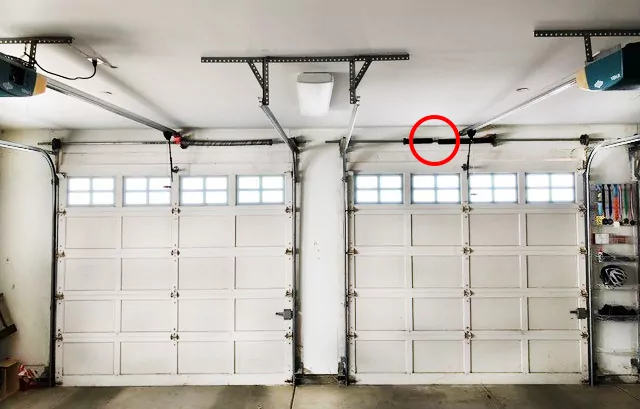
Look up at the torsion spring mounted horizontally above your garage door (when closed). A healthy spring is a tightly wound coil with no visible spaces between the coils. If you notice a gap—even a small one—it means the spring has snapped or is on the verge of breaking.
A gap of 1-2 inches in the spring is a clear sign of a broken garage door spring. This is an immediate red flag. Do not attempt to operate your door if you see this, as the remaining tension in a partially broken spring can be extremely dangerous. Contact a professional garage door technician right away.
3. Loud Bang from the Garage
Did you hear a loud bang or snap coming from your garage, almost like a firecracker or car backfiring? This startling sound is often the telltale sign of a garage door spring breaking. The tremendous tension stored in these springs releases all at once when they snap, creating that distinctive explosive sound.
If you heard this sound and now your door won’t open properly (or at all), a broken spring is almost certainly the culprit. This situation requires immediate professional service—never try to force the door open or use the opener repeatedly, as this can cause additional damage to your garage door system.
4. Garage Door Opens Unevenly or Gets Stuck
Most two-car garage doors use two springs working in tandem. When one spring weakens or breaks while the other is still functional, you’ll notice your door opening crooked or jerky. One side may lift faster than the other, or the door may get stuck partway up.
This uneven operation puts severe stress on your garage door tracks, hinges, and opener—components that weren’t designed to compensate for spring failure. Continuing to operate your door in this condition can lead to bent tracks, stripped gears in your opener, and even cable derailment.
5. Your Garage Door Opener Is Straining
Your garage door opener is designed to guide the door and provide a small amount of lifting assistance—not to do all the heavy lifting. When springs lose their tension, your opener has to work much harder than intended.
Signs that your opener is straining include slower-than-normal operation, grinding or humming noises, the motor running but the door barely moving, or the opener stopping mid-cycle due to the safety features kicking in. If left unchecked, this extra stress will significantly shorten your opener’s lifespan—and a new garage door opener costs considerably more than spring replacement.
6. Cables Are Loose, Frayed, or Hanging
The garage door cables work in conjunction with your springs to safely lift and lower the door. When a spring breaks or loses tension, the cables often become loose, tangled, or even snap under the sudden change in load.
Take a look at the cables running along the sides of your door. They should be taut and neatly wound on the cable drums at the top. If you see slack cables, fraying strands, or cables hanging loose, this indicates either a spring failure or cable wear that needs immediate professional repair. Damaged cables are a serious safety hazard and should never be ignored.
7. Rust and Visible Wear on Springs
Central Minnesota winters are tough on garage door components. The combination of cold temperatures, road salt tracked into garages, and humidity fluctuations accelerates rust and corrosion on garage door springs.
Inspect your springs periodically for signs of rust (orange or reddish discoloration), pitting, or flaking metal. Severely rusted springs are weakened and much more prone to sudden failure. While light surface rust can be addressed with proper lubrication during regular maintenance, heavy corrosion is a sign that replacement is in your near future.
Understanding Torsion Springs vs. Extension Springs
Not all garage door springs are created equal. Understanding which type of spring system your garage door uses can help you better identify problems and communicate with your repair technician.
Torsion Springs
- Location: Mounted horizontally above the closed door
- How they work: Use torque (twisting force) to lift the door
- Lifespan: 10,000-20,000 cycles (7-14 years)
- Best for: Heavier doors, smoother operation, greater durability
- Safety: Contained on shaft when they break
Extension Springs
- Location: Mounted along the horizontal tracks on each side
- How they work: Stretch and contract to counterbalance door weight
- Lifespan: 5,000-10,000 cycles (4-7 years)
- Best for: Lighter doors, lower ceilings, budget installations
- Safety: Can fly dangerously if they break (safety cables recommended)
Why Garage Door Spring Replacement Is NOT a DIY Job
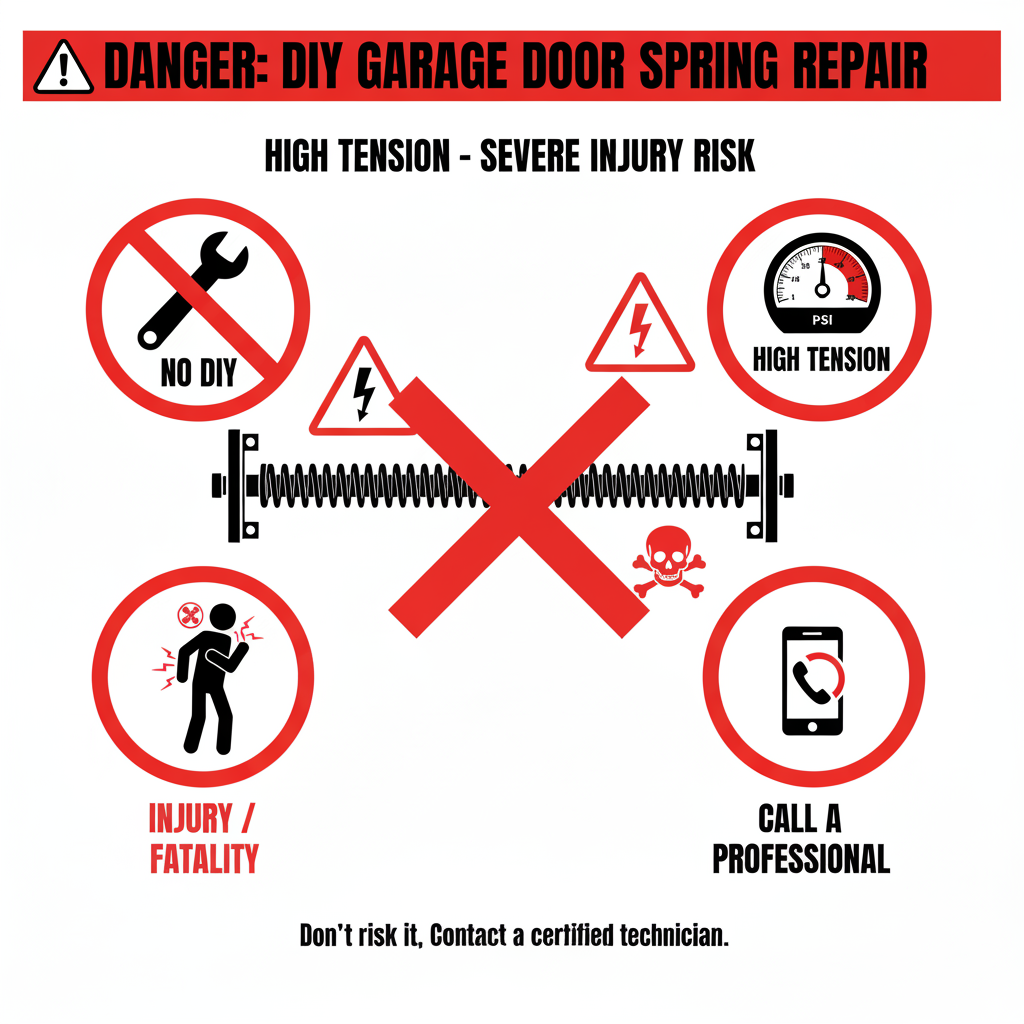
We understand the appeal of DIY projects—they can save money and provide a sense of accomplishment. However, garage door spring repair is one of the most dangerous home maintenance tasks and should always be left to trained professionals. Here’s why:
Extreme Tension = Extreme Danger
Garage door torsion springs are wound under tremendous tension—enough force to lift a 200+ pound door thousands of times. When this tension is released uncontrollably, the spring can spin violently or fly off the shaft at high speed. Emergency rooms across the country see serious injuries and even fatalities each year from amateur garage door spring repair attempts.
Specialized Tools and Training Required
Professional garage door technicians use specialized winding bars, proper safety equipment, and undergo extensive training to safely handle spring replacement. The tools required aren’t typically available at hardware stores, and without proper training, even having the right tools won’t keep you safe.
Precise Calculations Matter
Springs must be precisely matched to your door’s weight, height, and track configuration. Installing the wrong spring—or winding it incorrectly—can result in a door that won’t stay open, slams shut unexpectedly, or puts dangerous stress on other components.
⚠️ WARNING: Attempting DIY garage door spring repair puts you at risk of severe injury or death. This is not an exaggeration—it happens every year.
What to Do If You Notice These Warning Signs
If you’ve identified one or more of the warning signs above, here’s what to do next:
- Stop using the door: If you suspect spring failure, avoid operating the door with the automatic opener. Continued use can cause additional damage to the opener, cables, tracks, and door panels.
- Disconnect the opener: Pull the red manual release cord to disconnect the door from the opener. This prevents accidental activation.
- Keep the area clear: Keep children, pets, and vehicles away from the garage door until it’s been inspected and repaired by a professional.
- Call a professional: Contact a reputable garage door repair company like Topline Garage Door Co. for prompt, safe repair service.
Central Minnesota’s Trusted Garage Door Spring Experts
For over 20 years, Topline Garage Door Co. has been helping Central Minnesota homeowners with all their garage door needs—including emergency garage door spring replacement. As a family-owned business, we understand the importance of fast, reliable service when your garage door isn’t working properly.
Why Choose Topline Garage Door Co.?
- Same-day service available: We know a broken garage door is an urgent problem. We offer 30-60 minute response times and same-day repairs.
- 24/7 emergency service: Springs don’t break on a convenient schedule. We’re available around the clock, 365 days a year.
- 5-year parts and labor guarantee: We stand behind our work with one of the best warranties in the industry.
- Lifetime warranty on cables and rollers: We use quality parts that last.
- BBB Accredited with A+ Rating: Our reputation speaks for itself with hundreds of 5-star Google reviews.
- Honest, upfront pricing: No hidden fees or surprise charges. We provide free estimates before any work begins.
How to Extend the Life of Your Garage Door Springs
While springs will eventually wear out regardless, proper garage door maintenance can help extend their lifespan and catch problems before they become emergencies:
- Lubricate springs twice yearly: Apply a silicone-based garage door lubricant (not WD-40) to your springs in spring and fall. This reduces friction and prevents rust.
- Perform the balance test annually: Disconnect your opener and manually lift the door halfway. If it doesn’t stay in place, your springs may need adjustment.
- Visual inspection: Check springs monthly for rust, gaps, or wear. Early detection can prevent inconvenient (and more expensive) emergency repairs.
- Schedule professional maintenance: Annual tune-ups by a qualified technician can identify worn springs and other components before they fail.
- Consider high-cycle springs: If you use your garage door frequently, ask about high-cycle springs rated for 25,000-50,000 cycles.
Frequently Asked Questions About Garage Door Springs
How much does garage door spring replacement cost?
The cost of garage door spring replacement varies depending on the type of springs, door size, and whether one or both springs need replacement. Most residential torsion spring replacements range from $150-$350 including parts and labor. We recommend replacing both springs at the same time—if one has failed, the other is likely near the end of its life as well.
How long does spring replacement take?
A professional garage door technician can typically complete a spring replacement in 30-60 minutes. Our team comes prepared with a fully stocked truck, so most repairs are completed in a single visit.
Can I open my garage door with a broken spring?
While it may be technically possible to manually force open a garage door with a broken spring, we strongly advise against it. The door will be extremely heavy (150-250+ pounds) and can slam down unexpectedly, causing injury or damage. Wait for professional repair.
Should I replace one spring or both?
We always recommend replacing both springs at the same time. Springs installed together experience the same wear. When one breaks, the other is typically close behind. Replacing both ensures balanced operation and saves you from paying for two service calls.
Frequently Asked Questions About Garage Door Springs
The cost of garage door spring replacement varies depending on the type of springs, door size, and whether one or both springs need replacement. Most residential torsion spring replacements range from $150-$350 including parts and labor. We recommend replacing both springs at the same time—if one has failed, the other is likely near the end of its life as well.
A professional garage door technician can typically complete a spring replacement in 30-60 minutes. Our team comes prepared with a fully stocked truck, so most repairs are completed in a single visit.
While it may be technically possible to manually force open a garage door with a broken spring, we strongly advise against it. The door will be extremely heavy (150-250+ pounds) and can slam down unexpectedly, causing injury or damage. Wait for professional repair.
We always recommend replacing both springs at the same time. Springs installed together experience the same wear. When one breaks, the other is typically close behind. Replacing both ensures balanced operation and saves you from paying for two service calls.
Conclusion
Your garage door springs work hard every day, and recognizing the warning signs of failure can save you from inconvenience, safety hazards, and costly secondary damage. If you’ve noticed any of the seven warning signs we’ve discussed—a heavy door, visible gaps in springs, loud bangs, uneven operation, a straining opener, loose cables, or rust and wear—it’s time to call a professional.
At Topline Garage Door Co., we’ve been serving Central Minnesota families for over two decades with fast, reliable, and honest garage door service. Whether you need an emergency spring replacement or want to schedule preventive maintenance, our skilled technicians are ready to help.
Need garage door spring repair? Call or text Topline Garage Door Co. at (763) 784-3667 for same-day service!